Speakers
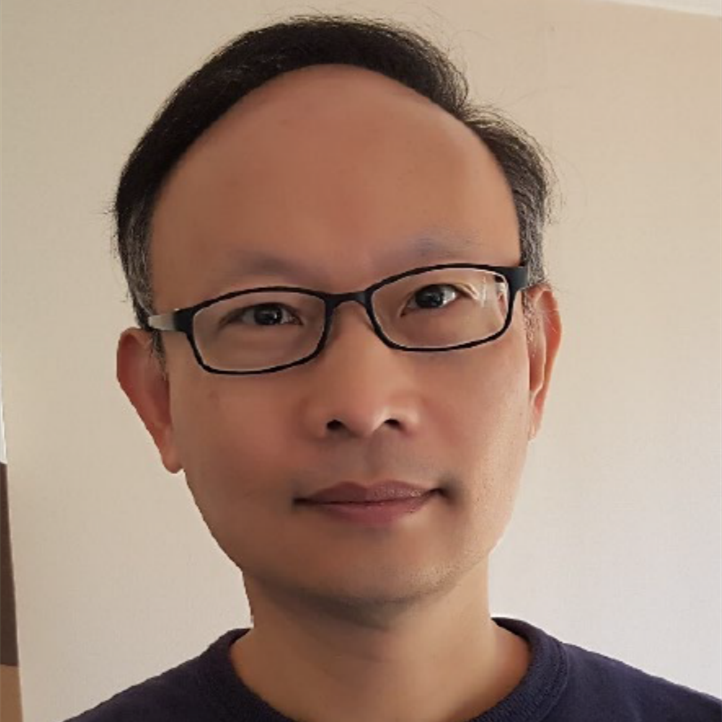
Prof. Wei-Chang Yeh
ASPEED, NTHU, and CYCU Chair Professor, National TsingHua University,
Taiwan
Biography:
Dr. Wei-Chang Yeh is the ASPEED
Chair Professor and Chair Professor in
the Department of Industrial Engineering
and Engineering Management at National
Tsing Hua University (NTHU), Taiwan. He
also serves as Chair Professor at Chung
Yuan Christian University. He received
his M.S. and Ph.D. degrees in Industrial
Engineering from the University of Texas
at Arlington.
Dr. Yeh’s research focuses on algorithm
design, exact solution methods, soft
computing, network reliability,
AI-enabled decision systems, and NP-hard
optimization problems. He has published
more than 300 SCI-indexed journal papers
and holds more than 70 patents. Since
2020, he has been listed among
Stanford/Elsevier’s Top 2% Scientists
worldwide for both career-long and
single-year impact. His major honors
include two Outstanding Research Awards,
one Distinguished Scholars Research
Project Award, and two Overseas Research
Fellowships from Taiwan’s MOST/NSTC.
He currently serves as an Associate
Editor for IEEE Transactions on
Reliability, IEEE Access, and
Reliability Engineering & System Safety.
He is the proposer of Simplified Swarm
Optimization (SSO) and the
Binary-Addition-Tree (BAT) framework.
Dr. Yeh is also an NVIDIA University
Ambassador for the Deep Learning
Institute and has received NVIDIA
research grant support. His recent work
connects AI robotics, digital twins,
reliability-aware navigation, and
intelligent decision support for
advanced manufacturing and autonomous
systems.